Adding a pool to your backyard is an exciting upgrade, especially as summer approaches. But before you can fully enjoy it, there is an important step many homeowners overlook: making sure your pool area meets proper safety standards. One of the most critical requirements is installing the right fence.
If you are wondering what type of fence is required around a pool, the answer depends on local codes, safety regulations, and proper installation. Understanding pool fence requirements in Pennsylvania can help you stay compliant, protect your family, and avoid costly mistakes.
Do You Need a Fence Around a Pool in Pennsylvania?
In most cases, yes. Residential pools are typically required to have a barrier that restricts access, especially to protect children and pets. These rules are designed to reduce the risk of accidents and improve overall backyard safety.
While Pennsylvania follows general safety guidelines, specific requirements can vary by township or municipality. That is why it is important to check local codes before installing or upgrading your pool fence. Even if requirements differ slightly, most follow similar safety principles.
Common Pool Fence Requirements Homeowners Should Know
Although exact rules may vary, most pool fence requirements include the following:
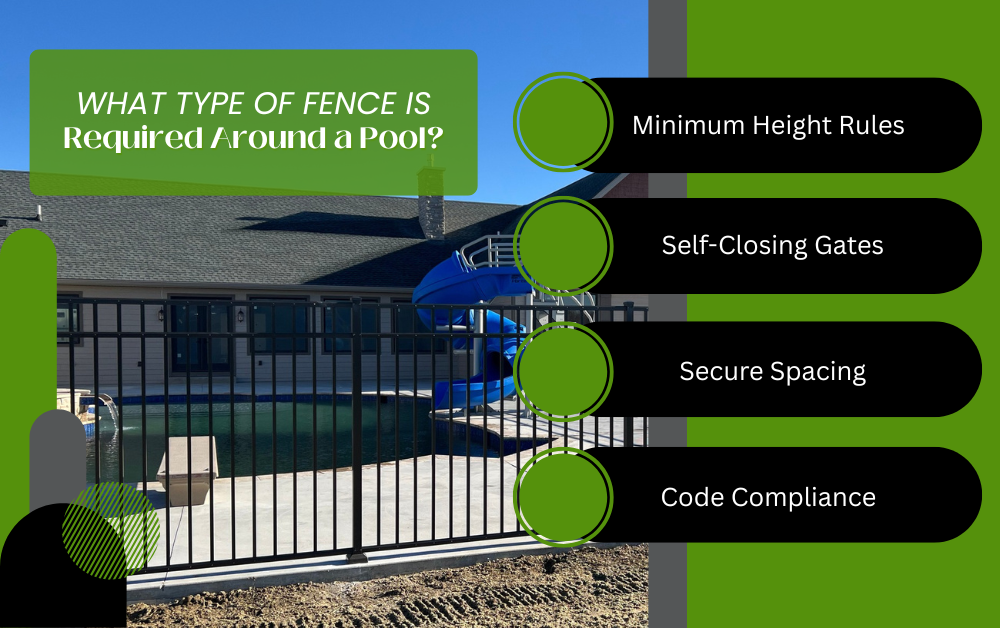
Minimum Fence Height
Many areas require pool fences to be at least four feet tall, though some locations may require additional height. A taller fence helps prevent children or pets from climbing over and entering the pool area unsupervised.
Gate and Latch Requirements
Pool gates are just as important as the fence itself. Gates are typically required to be self-closing and self-latching. The latch should be placed high enough to prevent small children from reaching it, adding an extra layer of protection.
Spacing and Openings
Fences should be designed to prevent children from squeezing through or getting stuck. This means limiting gaps between pickets or panels and ensuring consistent spacing throughout the fence.
Distance from the Pool
In most cases, the fence should fully enclose the pool area and be positioned to create a secure barrier. Proper placement ensures there are no easy access points.
Best Fence Types That Meet Pool Fence Requirements
Choosing the right material is key to meeting pool fence requirements while maintaining a clean, attractive look.
Aluminum Fencing
Aluminum fencing is one of the most popular choices for pool areas. It provides durability, visibility, and compliance with most safety codes. The open design allows for easy supervision while still creating a secure barrier.
Vinyl Privacy Fencing
Vinyl fencing offers a more private option. Solid panels prevent outside visibility and reduce climbable surfaces. It is also low maintenance, making it a practical choice for homeowners who want both security and convenience.
Other Specialty Options
For higher-end properties, options like glass fencing or custom designs may be considered. These solutions can meet safety standards while enhancing the overall appearance of the pool area.
Safety Features That Improve Pool Fencing
Beyond basic requirements, certain features can improve both safety and functionality.
Self-closing hinges ensure gates automatically shut after use. Lockable gates add an extra layer of security when the pool is not in use. Non-climbable designs reduce the risk of children scaling the fence, while clear sightlines allow homeowners to monitor activity around the pool.
Common Pool Fence Mistakes to Avoid
One of the most common mistakes homeowners make is assuming any fence will meet pool fence requirements. In reality, improper height, poorly installed gates, or gaps in the fence can lead to code violations.
Other mistakes include choosing style over safety or skipping the step of checking local regulations. These issues can result in costly changes or delays after installation.
Above-Ground Pools: Do the Same Rules Apply?
Above-ground pools often have slightly different requirements, but safety still applies. In some cases, the pool walls themselves may meet height requirements. However, ladders, steps, or attached decks must often be secured or enclosed.
Because rules vary, it is important to verify what applies to your specific setup.
How to Make Sure Your Pool Fence Meets Requirements
The best way to ensure your fence meets pool fence requirements is to plan ahead. Start by reviewing local township guidelines and confirming what is required for your property. From there, choose materials and designs that align with both safety standards and your backyard goals.
Working with experienced professionals can help simplify the process and prevent costly mistakes.
Stay Safe and Compliant with the Right Pool Fence
Installing the right fence around your pool is about more than meeting requirements. It is about creating a safe, secure space where you can relax and enjoy your backyard with confidence.
If you are planning a pool fence and want to make sure it meets all necessary requirements, working with a trusted contractor can make the process easier. Perry Fencing provides expert guidance and professional installation throughout Pennsylvania and Maryland, helping homeowners choose pool fencing solutions that are both safe and compliant.