Summer storms can arrive quickly and bring strong winds, heavy rain, and falling debris that put stress on your property. While homeowners often focus on roofs, siding, and trees after a storm, fences are another part of the property that can suffer significant damage.
Even a well-built fence can weaken over time if repeated storm damage goes unnoticed. Understanding how summer weather affects fencing can help homeowners catch problems early and avoid more expensive repairs later.
Why Summer Storms Are Hard on Fences
Fences are constantly exposed to the elements, and summer storms create several conditions that can weaken even durable materials.
Strong Wind Gusts
High winds place pressure directly against fence panels and posts. Solid fences, especially privacy fencing, absorb more wind force because they create a continuous barrier. Over time, repeated gusts can loosen fasteners, shift posts, or even cause sections to lean or collapse.
Heavy Rain and Saturated Ground
Summer storms often bring heavy rainfall that softens the ground around fence posts. When soil becomes saturated, posts lose stability and may begin to shift or lean. This is especially common in older fences or fences with weaker post materials.
Falling Branches and Debris
Storms also increase the risk of tree limbs and debris falling onto fencing. Even smaller branches can crack rails, damage panels, or bend sections out of alignment.
Common Types of Fence Storm Damage
Storm damage is not always obvious right away. Some problems develop gradually after repeated exposure to harsh weather.
Leaning Fence Posts
One of the earliest warning signs is a fence that no longer stands straight. Leaning posts often indicate shifting soil or weakened structural support below ground.
Loose or Broken Panels
Strong winds can loosen screws, nails, and rails over time. Panels may begin rattling during storms or show visible separation from posts.
Rot and Moisture Damage
Repeated moisture exposure can accelerate wood rot, especially in fences with aging or lower-quality posts. Water damage weakens structural integrity and shortens the lifespan of the fence.
Gate Misalignment
If posts shift after a storm, gates may stop closing properly. Gates that drag, stick, or sag are often signs of movement within the fence structure.
Which Fence Types Handle Storms Best?
Some fence materials perform better than others during severe weather.
Vinyl Fencing
Vinyl fencing resists moisture damage well and does not rot like traditional wood. When professionally installed with strong posts, it can hold up well during storms.
Aluminum Fencing
Aluminum fencing performs well in windy conditions because its open design allows air to pass through rather than pushing directly against solid panels.
Split Rail Fencing with Locust Posts
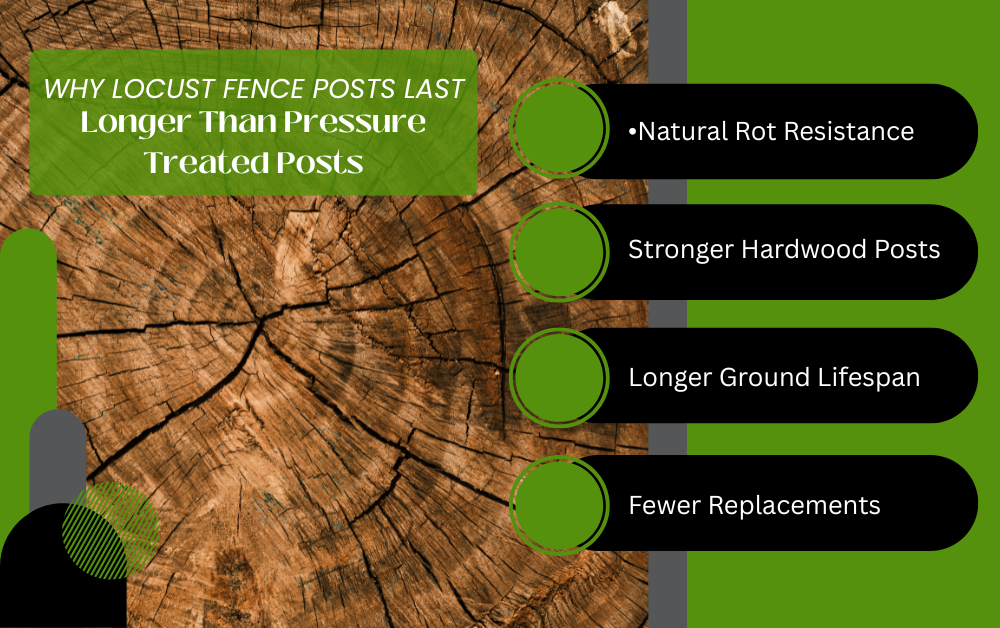
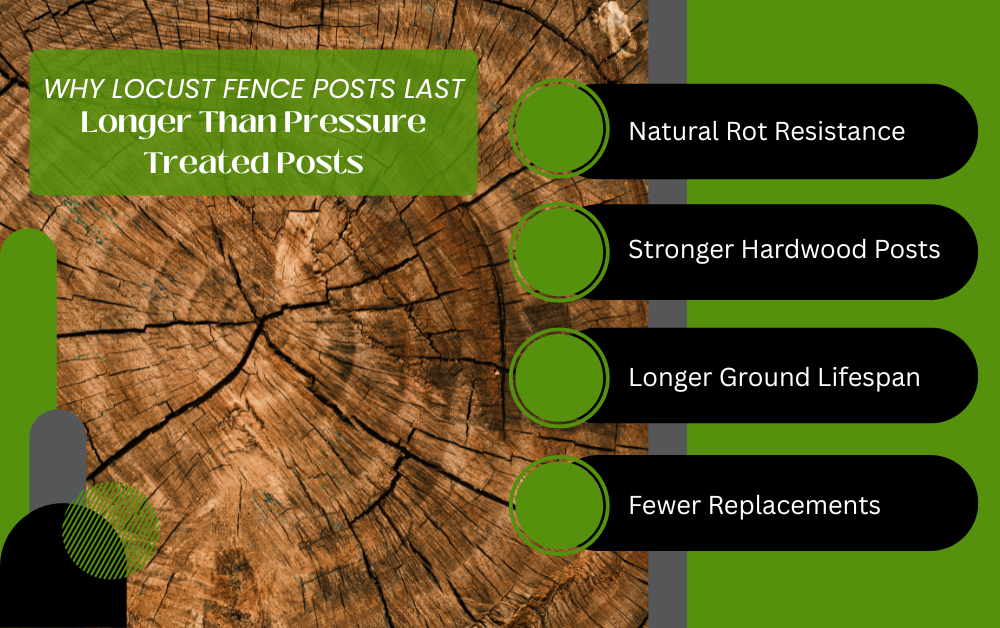
Split rail fencing built with locust fence posts offers strong durability in changing weather conditions. Locust wood naturally resists rot and ground moisture, making it a reliable option for long-term outdoor performance.
How to Protect Your Fence from Summer Storm Damage
While storms cannot be prevented, homeowners can take steps to reduce the risk of major fence damage.
Regular Fence Inspections
Checking your fence periodically helps identify small problems before storms make them worse. Look for loose posts, cracked rails, weakened fasteners, or shifting sections.
Trim Nearby Trees and Branches
Overhanging limbs are one of the biggest threats during storms. Trimming trees near your fence reduces the risk of falling debris causing structural damage.
Reinforce Weak Areas Early
Small repairs now can prevent larger failures later. Tightening loose hardware or replacing damaged posts early can improve the fence’s ability to handle future storms.
Invest in Durable Materials
The quality of the fence materials matters. Strong posts and professional installation improve overall durability and long-term storm resistance.
Signs You Should Repair Your Fence After a Storm
After a major storm, homeowners should inspect their fence for warning signs of damage.
Look for:
- Leaning sections
- Loose or unstable posts
- Cracks or splits in rails or panels
- Gates that no longer close properly
- Soil erosion around fence posts
Even minor issues can worsen if left unaddressed.
When Storm Damage Means It’s Time for Replacement
In some cases, repairs may no longer be the best solution.
Repeated Repairs
If the same sections of fence continue failing after storms, replacement may be more cost-effective over time.
Aging or Rotting Posts
Older posts that have begun rotting below ground can compromise the entire fence structure.
Widespread Damage
When damage affects multiple sections, replacing the fence may provide better long-term value and reliability.
Protect Your Fence Before the Next Storm
Summer storms can cause gradual or immediate fence damage, especially when fences are already weakened by age or moisture exposure. Catching small issues early and investing in durable materials can help extend the life of your fence and reduce costly repairs.
For homeowners looking to repair, reinforce, or replace storm-damaged fencing, Perry Fencing provides professional fencing solutions throughout Pennsylvania and Maryland. From durable privacy fencing to split rail fencing with locust posts, choosing the right materials can make a major difference when severe weather arrives.