When homeowners invest in a fence, most of the attention goes to the rails, boards, or overall appearance. But one of the most important parts of any fence is what is underground: the posts.
Fence posts are responsible for supporting the entire structure year after year through changing weather, moisture, and daily wear. When posts begin to fail, the rest of the fence usually follows. That is why choosing the right material matters.
At Perry Fencing, locust fence posts paired with hemlock rails are often recommended for split rail fencing because of their durability, strength, and long lifespan. For homeowners with pets or livestock, welded wire can also be added for extra functionality without losing the traditional look.
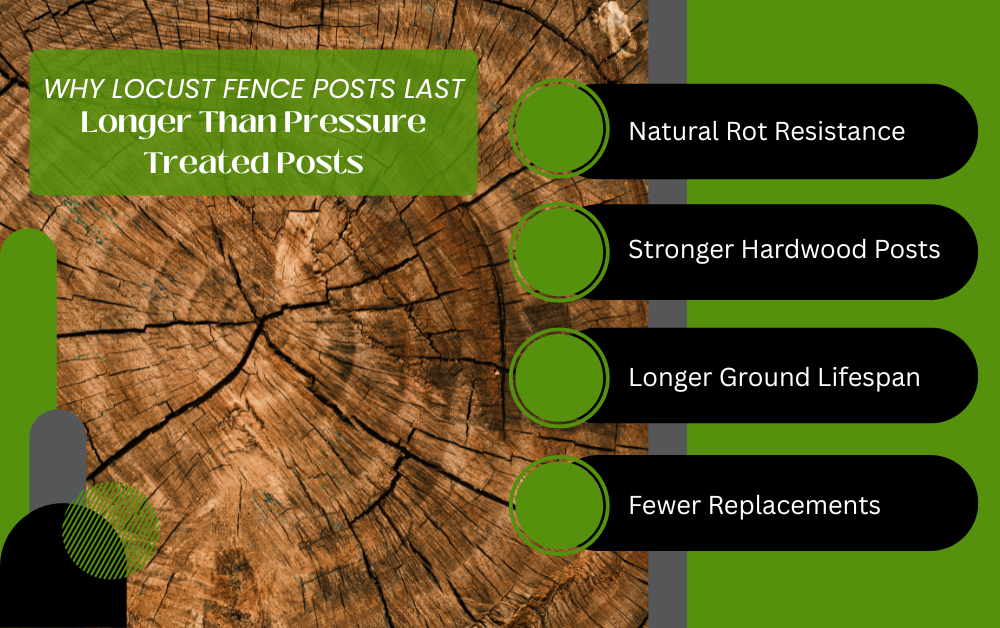
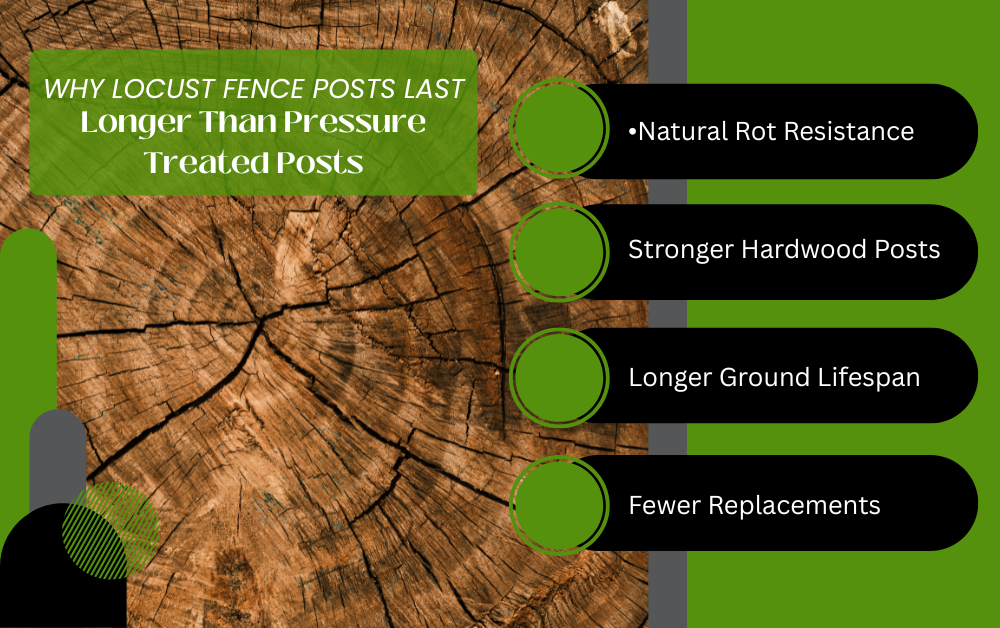
So, why do locust fence posts last longer than pressure treated posts?
What Are Locust Fence Posts?
Locust fence posts are made from black locust wood, a dense hardwood known for its natural durability.
A Naturally Durable Hardwood
Unlike softer woods, locust is extremely dense and strong. It has been used for generations in agricultural and rural fencing because it holds up well under heavy use and changing weather conditions.
This natural hardness helps locust fence posts resist cracking, splitting, and general wear over time.
Naturally Resistant to Rot and Insects
One of the biggest advantages of locust is its natural resistance to decay and insects. Unlike pressure treated wood, which depends on chemical treatment for protection, locust contains natural compounds that help it resist rot even when placed directly in the ground.
This makes it especially valuable for long-term fencing projects.
How Pressure Treated Fence Posts Are Made
Pressure treated fence posts are commonly made from softer woods, such as pine, that are infused with chemicals to help resist moisture and insects.
Softwood with Chemical Treatment
The pressure treatment process forces preservatives into the wood to improve durability. While this does extend the lifespan of the wood, the underlying material is still relatively soft compared to hardwoods like locust.
Why Treatment Doesn’t Last Forever
Over time, pressure treated posts can still weaken. Exposure to moisture, changing temperatures, and ground contact eventually causes the wood to break down. As the chemicals wear off or leach out, the posts become more vulnerable to decay and damage.
Locust Fence Posts vs Pressure Treated Posts
When comparing the two materials side by side, the differences become more noticeable over time.
Hardness and Strength
Locust fence posts are significantly harder than pressure treated pine posts. This added hardness improves resistance to dents, cracking, and impact damage.
For fences exposed to livestock, equipment, or regular outdoor activity, this extra durability makes a major difference.
Resistance to Damage
Pressure treated softwood is more likely to split or crack under stress. Locust wood holds up better against everyday wear, weather exposure, and physical impact.
Resistance to Rot and Insects
Pressure treated posts rely heavily on chemicals for protection. Locust, on the other hand, naturally resists decay and insects without depending entirely on treatment processes.
Longevity in the Ground
One of the biggest reasons homeowners choose locust fence posts is longevity. Locust posts often last decades longer than pressure treated alternatives, especially in ground-contact applications where moisture causes the most damage.
That means fewer repairs, fewer replacements, and a stronger fence over the long term.
Why Perry Fencing Recommends Locust Posts with Hemlock Rails
Locust posts paired with hemlock rails create a durable and attractive split rail fencing system.
Traditional Rural Appearance
This combination provides the classic split rail look that works well on farms, large rural properties, driveways, and country homes.
Long-Term Durability
The strength of locust posts combined with sturdy hemlock rails creates a fence system designed to last for years with fewer maintenance concerns.
Lower Long-Term Maintenance
Because locust holds up so well in the ground, homeowners often deal with fewer repairs and post replacements compared to softer treated woods.
Adding Welded Wire for Pets and Livestock
For homeowners with dogs, livestock, or small animals, welded wire can easily be added to split rail fencing without sacrificing appearance.
This upgrade provides additional containment while maintaining the traditional open style of the fence. It is a popular option for pet owners who want both functionality and curb appeal.
Is Locust Worth the Higher Initial Cost?
In many cases, yes.
Long-Term Value vs Upfront Savings
While locust fence posts may cost more initially, they often save money over time because they require fewer replacements and repairs.
Better Investment for Permanent Fencing
For homeowners planning a long-term fencing solution, durability matters. Investing in stronger materials upfront can reduce maintenance headaches and extend the life of the entire fence system.
Invest in Fence Posts Built to Last
A fence is only as strong as the posts holding it up. While pressure treated posts may seem like the more affordable option initially, locust fence posts offer superior durability, natural resistance to decay, and significantly longer lifespans.
For homeowners looking for a split rail fencing solution that combines strength, appearance, and long-term value, Perry Fencing recommends locust posts with hemlock rails, with welded wire options available for pets and livestock. The right materials now can help prevent costly repairs and replacements later.