When the first big snow of the season hits, most homeowners rush outside to shovel driveways, clear sidewalks, and fire up the snow blower. But while focusing on keeping paths safe, it’s easy to overlook something else that needs protection—your fence. Whether you have a wood, vinyl, aluminum, or chain link fence, heavy snow and aggressive snow removal can cause more harm than you think. From scratched panels and bent posts to hidden water damage, improper snow clearing can shorten the life of your fence.
The good news? With a few simple precautions and the right techniques, you can remove snow efficiently without risking damage. In this guide, we’ll share practical steps to keep your fence safe all winter long, so it stays sturdy and attractive well into spring.
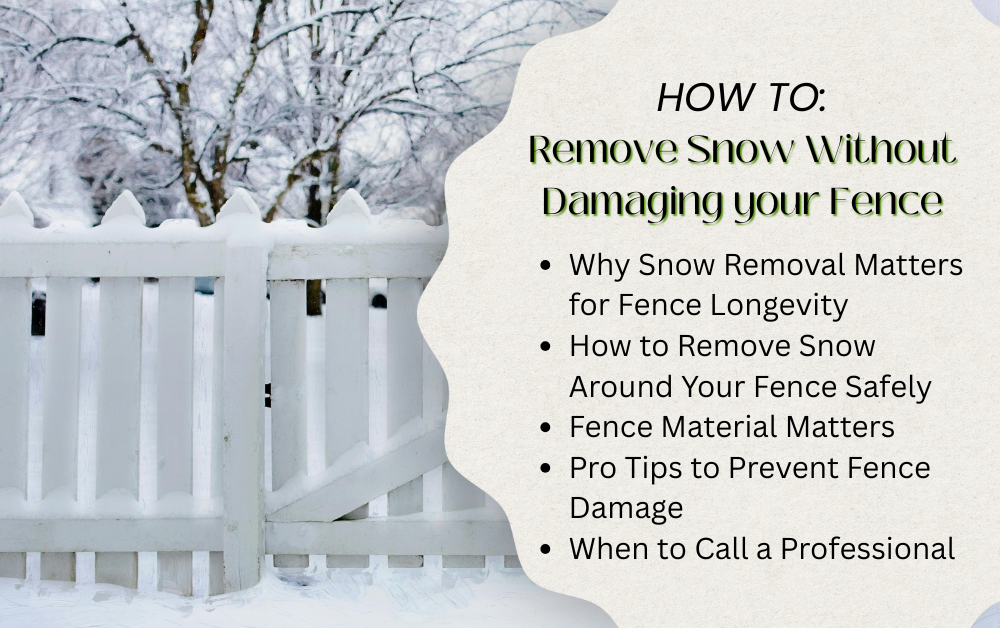
Why Snow Removal Matters for Fence Longevity
Snow might look soft and harmless, but over the course of a Pennsylvania or Maryland winter, it can become one of your fence’s biggest enemies. When snow piles up, the added weight can push against fence panels or posts, slowly causing them to bend, lean, or even crack. As temperatures fluctuate, melting snow seeps into small gaps and refreezes at night, expanding inside the material and leading to warping or splitting, especially in wood fences.
Beyond the physical pressure, moisture exposure from snow and ice can accelerate rust on metal fences or cause mildew and rot in wood. Even vinyl fences, while low maintenance, can become brittle in extreme cold and more susceptible to cracking if hit by a shovel or snowblower discharge.
That’s why learning how to remove snow properly isn’t just about keeping your yard tidy; it’s about protecting your investment. Clearing snow the right way helps preserve your fence’s structure, color, and stability, preventing costly repairs once spring arrives.
How to Remove Snow Around Your Fence Safely
When winter weather strikes, removing snow around your fence requires more strategy than strength. Clearing snow too aggressively can do more harm than good, especially when the ground is frozen and fence materials are more fragile. By taking your time and using the right tools, you can protect your fence while keeping your property safe and accessible.
Start by Creating a Safe Snow Removal Zone
Before the first storm, take a few minutes to prepare. Mark your fence line with tall stakes or reflective markers so it remains visible when snow piles up. This helps you avoid hitting posts or panels when clearing pathways.
When you remove snow:
- Work in smaller layers instead of letting snow pile up deeply
- Push snow away from the fence rather than toward it
- Keep plowed snow directed away from posts and panels
- Clear a few extra feet around the fence to prevent buildup from drifting snow
Smaller, lighter passes prevent pressure from building up against your fence and reduce the risk of damage from heavy shoveling or plowing.
Use the Right Tools and Techniques
The type of equipment you use makes a big difference. Choose tools and techniques that are gentle on your fence:
- Use plastic shovels instead of metal to avoid scratches
- Keep snow blowers at least 12 to 18 inches away from the fence
- Aim the chute away from the panels to avoid blasting ice or gravel
- Push rather than chop when snow is compacted or frozen
If snow is frozen to the ground, allow sunlight to soften it before removal whenever possible.
Manage Ice Buildup and Snow Drift
After clearing the area, check for lingering ice or packed snow along the base of your fence. Keep these tips in mind:
- Avoid using rock salt or harsh de-icers that can discolor or corrode certain materials
- Use sand or calcium magnesium acetate for safer ice control
- For wood fences, gently brush off snow and ice with a broom
- Never strike the surface to remove ice, as it can splinter boards or damage coatings
Following these steps ensures that when you remove snow, you’re also protecting the integrity of your fence all winter long.
Fence Material Matters — Tailor Your Approach
Every fence material reacts differently to winter weather. Understanding how snow and ice affect each type will help you choose the safest removal methods and reduce long-term wear.
Wood Fences
Wood fences bring a natural look to your property, but they also require more care in cold and wet conditions. Snow can trap moisture against the wood, leading to rot, mildew, or warping over time.
To protect your wood fence:
- Avoid piling snow directly against panels or posts
- Clear snow away from the base so it can dry evenly
- Apply a quality sealant or stain before winter to block moisture
- After storms, brush off snow gently rather than chipping or scraping
By keeping snow and moisture off the surface, you’ll make it easier to remove snow during the next storm and keep your fence looking great year-round.
Vinyl Fences
Vinyl fences are durable and low maintenance, but they can become brittle when temperatures drop. Cold vinyl is more prone to cracking if hit with heavy snow or ice.
Keep your vinyl fence safe by:
- Using only plastic shovels near it
- Aiming your snow blower chute away from the panels
- Clearing snow regularly so piles do not press on the rails
- Rinsing off salt residue after storms to prevent discoloration
A gentle approach helps preserve the smooth surface and prevents small cracks from spreading in the cold.
Aluminum and Chain Link Fences
Metal fences can handle heavier snow but still face unique challenges during the winter. Prolonged contact with wet snow or ice can encourage rust and corrosion, especially around joints and hardware.
Protect metal fencing with these steps:
- Keep snow from collecting at the base to prevent frost heave
- Check posts and fasteners after major storms to ensure they remain tight
- Wipe down areas that stay wet to reduce rust risk
- Apply a rust-resistant coating before the season for added protection
A quick inspection after each snowfall can go a long way toward maintaining a sturdy and attractive metal fence all year long.
Pro Tips to Prevent Fence Damage Before It Starts
Preventing fence damage begins long before the snow falls. A few smart habits in early winter can help your fence survive even the harshest storms without strain.
Start by inspecting your fence for loose hardware, leaning posts, or signs of rot and rust. Trim overhanging branches that could drop snow or ice onto your fence, and grade the ground so melting snow drains away instead of pooling at the base. If you live in an area with frequent snowdrifts, a temporary snow fence can also reduce buildup before you need to remove snow by hand.
When to Call a Professional
Sometimes, winter weather wins despite your best efforts. If your fence starts to lean, crack, or shift after a heavy snowfall, it’s best to bring in a professional. Frozen ground and hidden ice can make DIY repairs risky and often lead to more damage.
A fence expert can identify whether the problem is frost heave, soil movement, or structural weakness and make repairs safely. Persistent drainage issues or soggy soil around posts are also signs that professional help is needed.
Perry Fencing offers expert inspections and repairs to restore your fence’s strength and stability after winter wear, ensuring it’s ready for the seasons ahead.
Conclusion
Winter snow doesn’t have to mean fence damage. With a little care, the right tools, and smart removal techniques, you can protect your fence and keep it looking its best all season long. Taking a few extra minutes to remove snow safely now will save you time and money when spring arrives.
Need help with winter fence repairs or maintenance? Contact Perry Fencing today for expert service and trusted solutions that keep your fence strong year-round.