Installing a fence is one of the most popular ways to improve your home’s privacy, security, and curb appeal. But for many homeowners, that excitement can turn into frustration after the project is complete.
From choosing the wrong materials to overlooking key details, there are several common fence mistakes that can lead to regret. The good news is that most of these issues are completely avoidable with the right planning.
Here’s what homeowners often regret about their fence—and how you can avoid making the same mistakes.
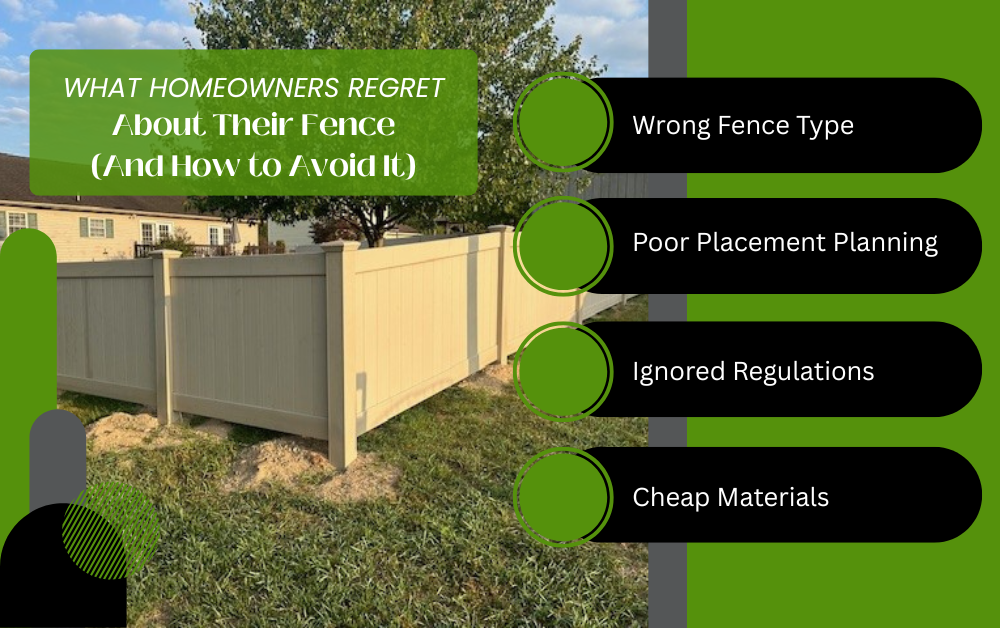
Choosing the Wrong Fence Type for Your Needs
One of the biggest mistakes homeowners make is choosing a fence based on looks alone without thinking about how it will be used.
Not Matching Fence to Lifestyle
A fence that works well for one household may not work for another. Families with pets or children often need a secure, enclosed fence, while others may prioritize appearance or property boundaries.
Focusing Only on Appearance
While curb appeal is important, a fence also needs to serve a purpose. A decorative fence may look great, but it may not provide the privacy or containment you need.
How to Avoid It
Think about how you will use your yard on a daily basis. Consider privacy, safety, and functionality before choosing a style.
Not Thinking About Long-Term Maintenance
Another common regret is underestimating how much maintenance a fence requires over time.
Underestimating Upkeep
Some materials require regular staining, sealing, or repairs. Others are designed to be low maintenance and hold up better over time.
Weather Impact Over Time
Sun exposure, moisture, and seasonal changes can all affect how a fence performs. Without proper material selection, you may end up dealing with warping, fading, or damage sooner than expected.
How to Avoid It
Choose a material that fits your willingness to maintain it. If you prefer minimal upkeep, look for durable, low-maintenance options.
Improper Fence Placement or Property Line Issues
Fence placement is more important than many homeowners realize.
Not Getting a Survey
Relying on assumptions about property lines can lead to disputes with neighbors. Even small mistakes in placement can create long-term issues.
Building Too Close or On the Property Line
Placing a fence directly on the line without clear agreement can lead to shared responsibilities or disagreements later.
How to Avoid It
Confirm your property boundaries before installation. A professional survey can prevent costly mistakes and ensure your fence is placed correctly.
Ignoring Local Regulations and HOA Rules
Skipping this step can lead to major headaches after installation.
Permit and Height Restrictions
Local municipalities often have rules about fence height, placement, and materials. Ignoring these can result in fines or required changes.
HOA Limitations
If your neighborhood has an HOA, there may be specific guidelines for fence style, color, and design.
How to Avoid It
Check local regulations and HOA requirements early in the process. This helps avoid delays and ensures your fence is compliant.
Choosing Price Over Quality
It is tempting to focus on the lowest price, but this often leads to regret.
Cheap Materials vs Long-Term Cost
Lower-quality materials may save money upfront but can lead to repairs or replacement sooner than expected.
Poor Installation Risks
A poorly installed fence may not hold up over time. Weak posts, uneven alignment, or loose panels can cause problems quickly.
How to Avoid It
Focus on overall value rather than just initial cost. Investing in quality materials and professional installation pays off in the long run.
Overlooking Gate Placement and Functionality
Gates are one of the most frequently used parts of any fence, yet they are often an afterthought.
Poor Access Planning
A poorly placed gate can make everyday tasks inconvenient, especially when moving equipment, pets, or outdoor furniture.
Weak Gate Installation
Gates are also one of the most common failure points if not properly installed.
How to Avoid It
Plan gate placement carefully based on how you use your yard. Make sure gates are built to handle regular use.
Not Planning for Future Needs
A fence should not only meet your current needs but also your future ones.
Expanding Families or Pets
Your needs may change over time. A fence that works now may not be enough later.
Backyard Upgrades
Adding features like a pool, patio, or outdoor living space can affect how your fence is used.
How to Avoid It
Think long-term when planning your fence. Consider how your property and lifestyle may evolve.
How to Avoid Fence Regret Altogether
The best way to avoid fence mistakes is to take a thoughtful approach from the start.
Work with experienced professionals, choose materials that match your needs, and plan your layout carefully. Taking the time to make informed decisions can save you from frustration later.
Build a Fence You Won’t Regret
A fence is a long-term investment in your home. By avoiding common fence mistakes and planning ahead, you can create a fence that adds value, improves functionality, and lasts for years.
If you are considering a new fence and want to make sure it is done right the first time, Perry Fencing can help. With expert guidance and professional installation, you can feel confident in your investment from day one.