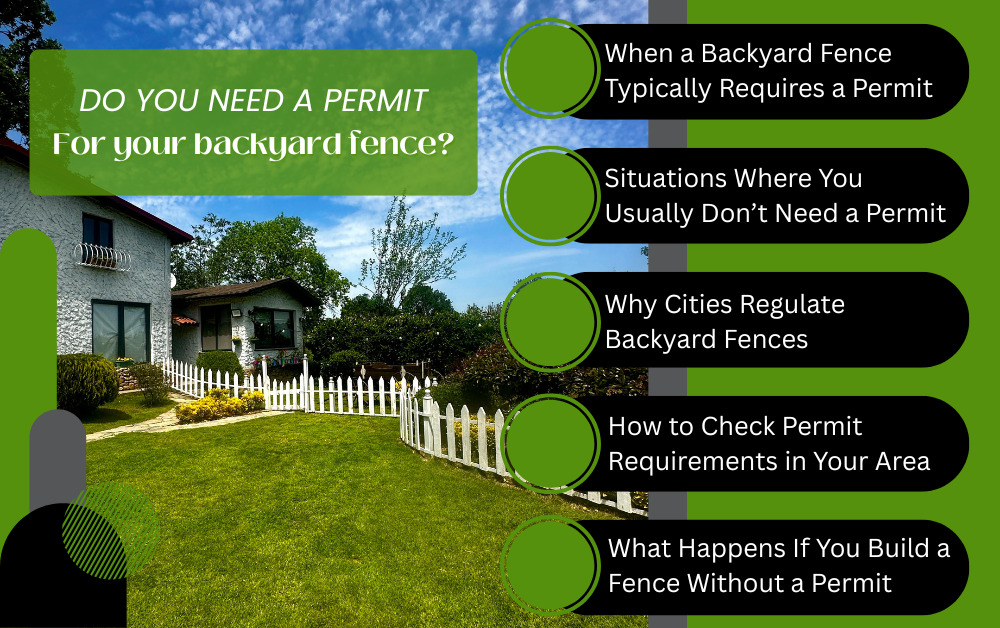
If you’re thinking about installing a backyard fence, one of the first questions that usually comes up is whether you need a permit. It’s a detail many homeowners don’t consider until they’re ready to build, and by then it can cause delays, extra costs, or even forced changes to the project.
The good news is that the rules aren’t as complicated as they seem. While every area has its own regulations, most permit requirements come down to a few key factors like fence height, location, and property lines. In this guide, we’ll break down when you typically need a permit for a backyard fence and how to find answers for your specific situation—so you can start your project with confidence.
When a Backyard Fence Typically Requires a Permit
Whether you need a permit for a backyard fence often depends on a few key details: how tall the fence will be, where it’s located on your property, and the rules set by your local township or borough. Most areas have clear regulations in place to keep neighborhoods consistent and to prevent disputes between neighbors.
A permit is commonly required when:
- The fence exceeds a certain height—often anything over six feet
- You’re installing a new fence in a different location rather than replacing an old one
- The backyard borders a road, alley, or public right-of-way
- You live in a neighborhood with zoning restrictions, such as historic districts or HOA communities
In many cases, cities and counties want to ensure that a backyard fence won’t interfere with utilities, block visibility for drivers, or cross over a property boundary. Checking these rules early helps you avoid delays once you’re ready to build.
Situations Where You Usually Don’t Need a Permit
Not every backyard fence project requires paperwork. In many areas, small updates or simple replacements fall under routine maintenance, which means you can move forward without applying for a permit.
You typically don’t need a permit when:
- You’re replacing an existing backyard fence at the same height and in the same location
- The fence you’re installing is below the local height limit
- You’re making minor repairs, like swapping out damaged boards or tightening loose posts
- Your property is in a residential area with more flexible zoning rules
Even though these situations often don’t require permits, it’s still smart to double-check your local regulations. Some townships have specific height rules or material restrictions that apply only to certain neighborhoods. A quick confirmation now can save you from unexpected issues later.
Why Cities Regulate Backyard Fences
It might seem unnecessary for a city or township to care about your backyard fence, but these rules exist to prevent problems before they happen. Permits help ensure that fences are safe, properly placed, and consistent with local guidelines.
Property boundaries
One of the biggest reasons for regulation is to prevent property line disputes. If a fence accidentally crosses into a neighbor’s yard, it can create legal issues and become costly to fix later. Permit reviews help confirm that the fence is being placed in the right spot.
Neighborhood safety and visibility
Local codes often include rules about sight lines, especially near driveways and street corners. A fence that’s too tall or positioned too close to a road can block visibility, which raises safety concerns for drivers and pedestrians.
Structural safety
Cities also want to make sure a backyard fence is built safely. This includes checking post depth, materials, and stability. Proper construction reduces the chance of a fence leaning, collapsing, or causing damage in high winds or storms.
By regulating these factors, cities help maintain safe, well-defined neighborhoods and protect homeowners from avoidable problems.
How to Check Permit Requirements in Your Area
Since every township or county sets its own rules, the best way to know whether you need a permit for your backyard fence is to get information directly from local sources. The process is usually quick and can save you from surprises once the project starts.
Start by contacting your local municipal office. Most townships, boroughs, and counties have zoning or building departments that can tell you exactly what’s required for residential fencing. Many also have online zoning maps, PDFs, or permit lookup tools that outline height limits, setback rules, and material restrictions.
Your fencing contractor can also be a great resource. Companies that work in your area regularly often know the local rules, and some can even help you pull the permit if needed.
Before you make any calls, it helps to have a few details ready:
- Your property address
- The planned height of your backyard fence
- The material you’ll be using
- Whether it’s a replacement fence or a brand-new installation
Having this information prepared makes it easy for zoning staff or contractors to give you accurate guidance right away.
What Happens If You Build a Backyard Fence Without a Permit
Skipping the permit process might seem harmless, especially if you are excited to start your backyard fence project. However, building without proper approval can lead to problems that are expensive and stressful to fix. Many homeowners do not realize the consequences until after the fence is already installed.
In most areas, the township will issue a notice of violation if a fence goes up without the required paperwork. This can include fines or a request to apply for a permit after the fact. If the fence does not meet local codes, such as being too tall or too close to a property line, you may be asked to adjust it or remove it entirely.
Unpermitted work can also create issues when selling your home. A backyard fence that is not documented properly may cause delays during inspections or bring up concerns for potential buyers. Insurance companies sometimes refuse to cover damage to structures that were never permitted, leaving the homeowner responsible for repairs.
Taking the time to check local requirements beforehand is a simple step that helps protect your investment and keeps your project hassle free.
When to Call a Professional
There are times when handling a backyard fence project on your own feels overwhelming, especially when permit rules or property boundaries are unclear. This is where a professional can make a big difference. An experienced installer understands local regulations, knows how to navigate the permitting process, and can help you avoid mistakes that lead to delays or extra costs.
A professional is especially helpful when your yard has uneven ground, unclear property lines, or specific neighborhood rules such as HOA guidelines or historic district requirements. They can walk you through the best placement, ensure the fence meets all local standards, and even assist with permit applications when needed.
Reaching out for expert guidance gives you confidence that every part of your project is handled correctly. It also ensures your backyard fence is safe, compliant, and built to last.
Conclusion
Understanding permit requirements before starting a backyard fence project can save you time, money, and unnecessary stress. While rules vary by location, most guidelines come down to height limits, placement, and property line protection. Taking a few minutes to check with your local township or speaking with a fence professional can prevent issues long before the first post goes into the ground.
If you are planning a new backyard fence and want to be sure everything is done the right way, Perry Fencing is here to help. Our team can guide you through local regulations, answer your questions, and provide expert installation for a fence that looks great and lasts for years. Contact us today to get started with a consultation or estimate.